Source Christmas Plastic Bow for Gift Wrapping and Party Decor
Compare 21 listings for christmas plastic bow options including pull bows, curly styles, and flower shapes. Evaluate specifications like size, material, and customization availability to find suitable wholesale suppliers for year-round decoration needs; compare the available evidence and request quotations based on your requirements.
Key considerations
Products List


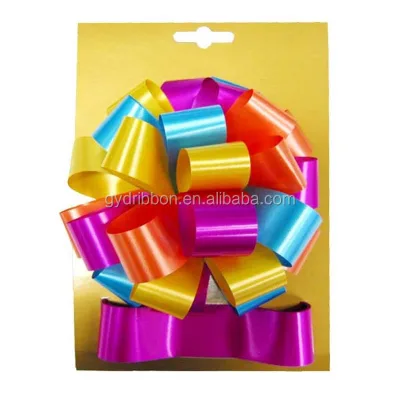
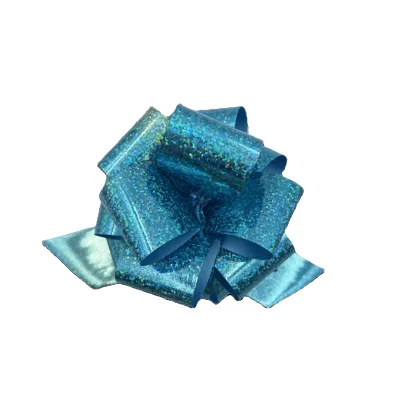
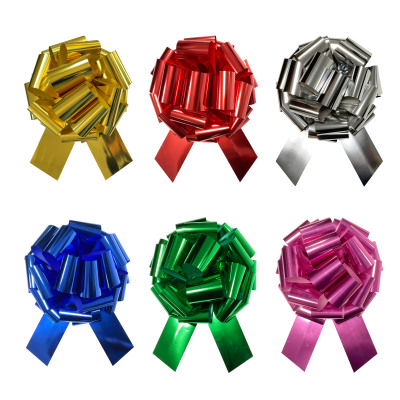
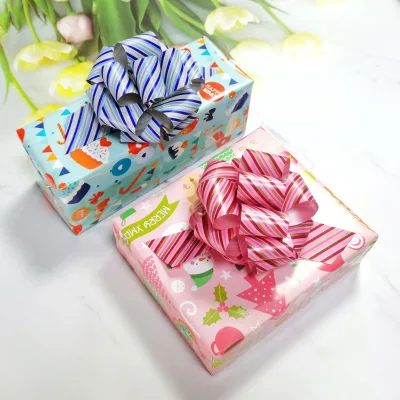
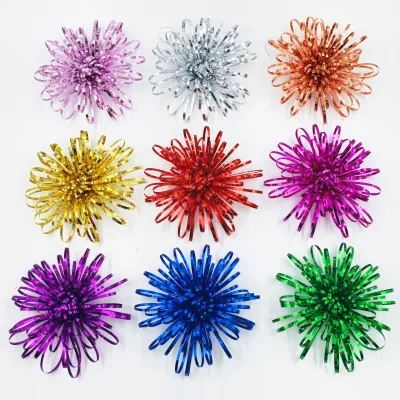


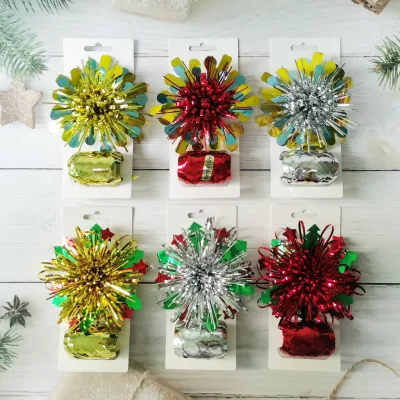


Comprehensive Sourcing Guide
Christmas Plastic Bow Sourcing Guide
Buyers evaluating Christmas plastic bows must first distinguish between decorative ribbon bows and structural holiday ornaments, as the product list reveals a mix of models like "Christmas bow," "curly bow," and "pull bow." The observed listings indicate that these items serve dual purposes as gift wrap accessories and standalone decorations, with some specifically designed for cake tying or candy wrapping. Understanding this functional split is critical before initiating a procurement cycle, as the manufacturing requirements for a simple ribbon pull bow differ significantly from those for a rigid, multi-strand Christmas decoration.
The market data shows a wide variance in customization options, ranging from non-customized standard sizes to fully bespoke dimensions like 5cm by 7.5 inches or specific strand counts. While some suppliers offer OEM services with established factory experience, others provide generic multicolour options suitable for universal application. Procurement teams should verify whether the specific model number, such as "YY-196" or "QBBC-061," aligns with the intended seasonal use, ensuring the selected product meets the aesthetic and functional needs of the target holiday market without unnecessary complexity.
Product Scope and Observed Listing Signals
The product scope for Christmas plastic bows encompasses a diverse array of styles, including curly variations, flower types, and standard butterfly shapes, all primarily constructed from plastic or polypropylene materials. Listings indicate that these items are available in various configurations, such as single pieces per bag or bulk cartons containing fifty units, reflecting different packaging strategies for retail versus wholesale distribution. Buyers must carefully review the "Type" attribute, which ranges from general "Decoration" to specific "Christmas Decorations," to ensure the inventory matches the intended display environment, whether indoor or outdoor.
Observed listing signals reveal that the supply chain originates from key manufacturing hubs in China, specifically Dongguang and Zhejiang, with some factories boasting over two decades of ribbon manufacturing experience. The price range observed is notably low, suggesting high-volume production capabilities, while the MOQs vary drastically from single units to thousands of pieces, offering flexibility for different order sizes. Procurement teams should note that while some products are marked as "Whole Year" suitable, others are explicitly tied to the Christmas season, requiring careful inventory planning to avoid overstocking off-season items.
Technical Specifications to Verify
Technical verification begins with confirming the physical dimensions and material composition, as specifications range from 3mm to 100mm in width and include specific strand counts like 12 strands for certain models. Buyers must validate the "prod_standard" details, which may list exact measurements like 5cm by 78cm or 3cm by 48cm, ensuring these align with the design requirements for gift wrapping or tree decoration. The material is consistently identified as plastic or polypropylene, but the specific grade and flexibility must be confirmed to prevent brittleness during handling or storage in varying temperatures.
Further technical checks involve assessing the customization capabilities, as some models allow for size adjustments while others are fixed to standard dimensions like 50mm or 1/8 inch. The "prod_packing" attribute varies significantly, with options including 1PC per bag, 10PC per bag, or bulk cartons, which impacts logistics and shelf-life management. Buyers should also verify the "Power Source" attribute, which is listed as non-power, confirming these are passive decorative elements, and ensure the "Shape" and "Style" attributes, such as "Cute" or "Bows," meet the specific aesthetic criteria of the target consumer demographic.
Compliance and Safety Documentation
While the provided data does not explicitly list specific safety certifications, buyers must request documentation proving compliance with international safety standards for plastic toys and holiday decorations, particularly regarding flammability and chemical content. Since these items are often used in close proximity to children or food, such as on cakes or gift wraps, verifying that the plastic and polypropylene materials are free from harmful phthalates or heavy metals is essential for market access in regions with strict consumer protection laws.
Procurement teams should also investigate the "OEM/ODM" capabilities of the supplier to ensure they can provide necessary compliance documentation for custom designs, as standard products may not automatically meet specific regional requirements. The "Application" attribute lists both indoor and outdoor use, which necessitates verification of UV resistance and weather durability if the bows are intended for exterior holiday displays. Without explicit test results in the source data, buyers must treat all safety claims as observations requiring third-party validation before finalizing any large-scale order.
Cost Drivers and Commercial Terms
Cost drivers for Christmas plastic bows are heavily influenced by the level of customization, with bespoke sizes and colors commanding higher prices than standard multicolour options. The observed MOQ range of 1 to 6000 units suggests that unit costs will fluctuate significantly based on order volume, with smaller orders likely incurring higher per-unit fees due to setup and handling costs. Buyers should analyze the "Delivery Time" of 15 days after sample confirmation as a baseline, understanding that rush orders or complex customizations may extend this timeline and impact the overall landed cost.
Commercial terms must be scrutinized regarding the "Service" offerings, specifically the availability of OEM services and the factory's experience level, which can influence pricing stability and quality consistency. The "Brand Name" and "Factory" attributes indicate that some suppliers operate as professional manufacturers with long-term industry presence, potentially offering better value through economies of scale. However, the lack of explicit price data in the source material requires buyers to negotiate based on the specific material weight, packaging complexity, and the agreed-upon customization level to secure a competitive rate.
Supplier Qualification and Quality Control
Supplier qualification should prioritize manufacturers with documented experience in ribbon and bow production, as indicated by the "22 Years Experience" claim found in the product data. Buyers must verify the "Factory" location and origin, distinguishing between suppliers in Dongguang and Zhejiang, as regional differences can affect logistics costs and communication efficiency. The presence of "OEM Offered" and "OEM/ODM Welcomed" attributes suggests a willingness to adapt, but this must be backed by a robust quality control system to ensure that custom orders match the approved samples in terms of color, shape, and material integrity.
Quality control protocols must address the variability in "prod_packing" and "prod_standard" to prevent damage during transit, especially for delicate curly or flower-style bows. Since the "Type" ranges from simple decorations to complex gift wrap accessories, suppliers should demonstrate the ability to maintain consistency across different product lines. Buyers should request evidence of in-house testing for material strength and colorfastness, ensuring that the "Multicolour" options do not bleed or fade, which is critical for maintaining brand reputation in the competitive holiday market.
Long-Term Procurement Checks
Long-term procurement success depends on establishing a reliable supply chain that can scale with seasonal demand fluctuations, particularly given the "Whole Year" suitability of some items versus the specific "Christmas" focus of others. Buyers should monitor the "Delivery Time" consistency over multiple cycles to ensure that the 15-day post-sample confirmation timeline remains stable during peak holiday periods. Building a relationship with a supplier that offers flexible MOQs allows for agile inventory management, reducing the risk of overstocking or stockouts as market trends shift.
Continuous verification of the "Customized" and "Non-Customized" product lines is necessary to adapt to changing consumer preferences and regulatory environments. Procurement teams should regularly audit the supplier's ability to maintain the "Standard" specifications, such as the 5cm by 7.5-inch dimensions or specific strand counts, to ensure product consistency. Finally, maintaining open communication regarding the "Brand Name" and "Factory" capabilities ensures that the supply chain remains transparent and responsive to any future design or compliance requirements that may arise.
FAQs
What customization options are available for christmas plastic bows?
Customization is available for these bows, allowing buyers to specify unique requirements. Options include customized sizes such as 5cm by 7.5 inches or other dimensions. Manufacturers also offer OEM services, enabling tailored designs. This flexibility ensures the products meet specific branding or aesthetic needs for various decorative applications throughout the year.
What are the standard specifications for these plastic bows?
Standard specifications vary by model, including sizes like 50mm or 5cm by 78cm. Some models feature curly designs with 6mm thickness and 12 strands. Others are pull bows measuring 3cm by 120cm. The material is typically plastic or polypropylene, ensuring durability. These specifications support diverse uses, from gift wrapping to general decoration.
Can I order small quantities of christmas plastic bows?
Yes, small quantities can be ordered as the minimum order quantity ranges from 1 to 6000 pieces. Some listings specify an MOQ of 50 pieces. This low entry point allows buyers to test market response or fulfill small-scale projects. The flexible MOQ structure supports both trial orders and larger bulk purchases for wholesale distribution.
Where are these christmas plastic bows manufactured?
These bows are manufactured in China, specifically in regions like Dongguan and Zhejiang. These locations are known for their ribbon and bow production capabilities. The origin ensures access to established supply chains and manufacturing expertise. Buyers can expect consistent quality and competitive pricing due to the concentrated industrial base in these Chinese provinces.
What is the typical lead time for these bows?
The typical lead time is 15 days after confirming samples. This timeline allows for production planning and quality checks. Buyers should account for this duration when scheduling deliveries. The lead time applies after sample approval, ensuring the final product matches the agreed specifications. This standard period helps manage inventory and project timelines effectively.
What packaging methods are used for these bows?
Packaging methods include individual bags, with one piece per bag. Larger orders may use cartons for efficient shipping. Some items are packed as ten pieces per bag, with twenty bags per package. This varied packaging approach protects the bows during transit and simplifies inventory management for buyers. The packaging ensures the products remain in good condition upon arrival.